
DeepSeek Success Could Spark Renewed Push for TikTok Ban Leave a comment
The Chinese language AI app DeepSeek has created a splash within the synthetic intelligence world not seen since OpenAI launched ChatGPT. All the eye garnered by the AI mannequin, nevertheless, may pose a menace to its success in the US, as different expertise corporations primarily based in international locations Uncle Sam considers “adversary states” have found.
Though the app is barely out of the beginning gate, questions have been raised about it as a menace to nationwide safety. These are the sorts of questions which have sunk U.S. gross sales of corporations like Kaspersky and Huawei and threaten the favored social media app TikTok.
“[T]he U.S. can’t enable CCP [Chinese Communist Party] fashions resembling DeepSeek to danger our nationwide safety and leverage our expertise to advance their AI ambitions. We should work to swiftly place stronger export controls on applied sciences important to DeepSeek’s AI infrastructure,” Rep. John Moolenaar, R-Mich., chairman of the Choose Committee on China, informed NBC Information Monday.
DeepSeek exploded on the scene over the weekend when it grew to become the highest obtain at Apple’s App Retailer in the US, vaulting AI stalwart ChatGPT. The Chinese language app has additionally been garnering kudos for its pace, effectivity, and mighty reasoning abilities.
What’s extra, it runs on much less highly effective chips than its U.S. rivals. In line with DeepSeek, these chips enable it to coach its mannequin for lower than US$6 million — a fraction of what Google, OpenAI, and Meta are spending to coach their fashions with top-of-the-line processors.
If DeepSeek’s claims about its expertise go scrutiny, it may dramatically impression the AI trade. There might be much less demand for high-octane chipsets, energy necessities might be curtailed, and there could be much less want for extra large-scale information facilities, resembling these to be constructed by the Trump administration’s $500 billion Stargate challenge.
“DeepSeek does drive a query concerning the prices and investments wanted to race to AGI outcomes and improvements,” mentioned Jeff Le, a former California deputy cupboard secretary.
“This race can also be centered on time however there are power and infrastructure penalties, particularly if there may be validation that will drive others to relook the recently-announced Stargate challenge,” he informed TechNewsWorld.
Nationwide Safety Dangers
Then there’s that nationwide safety factor that has tripped up corporations like Huawei, Kaspersky, and, most not too long ago, TikTok.
In 2018, Huawei was a high-flying smartphone and telecommunications maker. It briefly pushed Apple to 3rd place within the international smartphone market. Nonetheless, Huawei smartphones have been banned from being bought in the US on account of nationwide safety issues, and its market share by no means recovered.
In 2024, the U.S. Division of Commerce’s Bureau of Business and Safety prohibited Kaspersky Lab from straight or not directly offering antivirus software program and cybersecurity services or products in the US or to U.S. individuals.
The bureau discovered that the corporate’s continued operations in the US offered a nationwide safety danger — as a result of Russian authorities’s offensive cyber capabilities and capability to affect or direct Kaspersky’s operations.
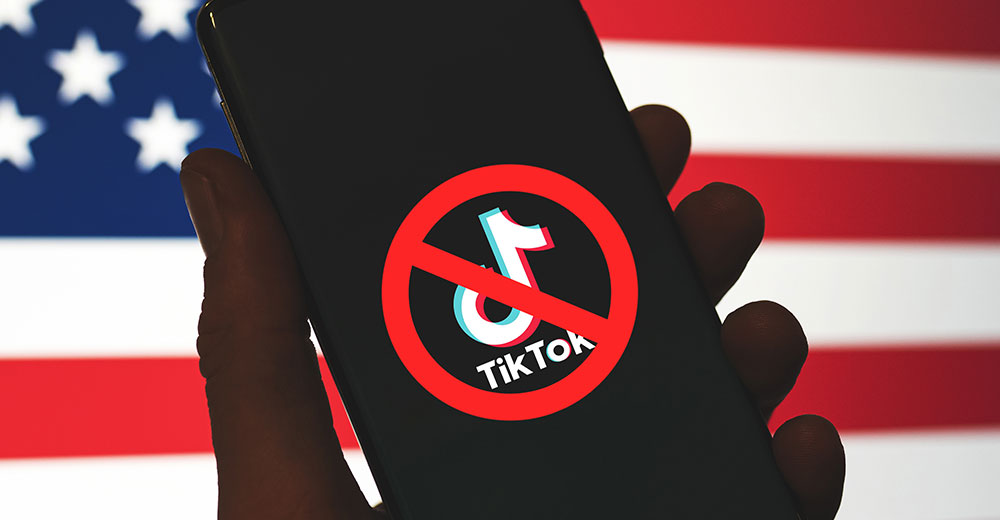
Then there’s TikTok, which Washington desires out of Chinese language arms for worry its proprietor, ByteDance, may probably accumulate and share delicate information from American customers with the Chinese language authorities.
DeepSeek may pose a better menace to nationwide safety than TikTok, maintained Allie Mellen, a senior analyst with Forrester, a nationwide market analysis firm headquartered in Cambridge, Mass. She identified that DeepSeek’s privateness coverage explicitly states it might accumulate “your textual content or audio enter, immediate, uploaded recordsdata, suggestions, chat historical past, or different content material” and use it for coaching functions.
“It additionally states it might share this data with regulation enforcement companies, public authorities, and so forth at its discretion, and that any data collected is saved in China,” she informed TechNewsWorld.
“As well as,” she continued, “the data being submitted into DeepSeek is extra wide-ranging. Some are submitting voice recordings, footage, private data, and enterprise information and IP into the instrument.”
Portal for Knowledge Leakage
Wealthy Vibert, CEO of Metomic, a knowledge privateness and safety software program firm in London, asserted that the chance of the U.S. authorities banning DeepSeek hinges on whether or not its capabilities are perceived as a nationwide safety menace.
“If the instrument demonstrates a possible for large-scale exploitation of vulnerabilities or potential to leak delicate information, it’s believable that regulatory or safety companies would possibly act to limit its use,” he informed TechNewsWorld.
Such vulnerabilities have been reported Monday by Kela, an Israeli menace intelligence firm. “Kela’s AI Pink Staff was capable of jailbreak the [DeepSeek] mannequin throughout a variety of eventualities, enabling it to generate malicious outputs, resembling ransomware growth, fabrication of delicate content material, and detailed directions for creating toxins and explosive units,” the corporate reported in a weblog.
“As AI applied sciences like DeepSeek develop into more and more superior, the dangers of failing to safe delicate information develop exponentially,” Vibert mentioned.
He famous that whereas each DeepSeek and TikTok elevate issues about information safety, their dangers are distinct. “Issues round TikTok deal with the size of information assortment, with fears round the place and the way that information is saved,” he defined. “DeepSeek, nevertheless, represents a extra focused danger, because it seems to be designed to establish and exploit vulnerabilities on an enormous scale.”
DeepSeek extends nationwide safety issues past the buyer privateness problems with TikTok, contended Gal Ringel, co-founder and CEO of MineOS, a knowledge governance platform primarily based in Tel Aviv, Israel. “It expands to the potential publicity of proprietary enterprise data, commerce secrets and techniques, and strategic company data,” he informed TechNewsWorld.
“Simply as TikTok raised purple flags about private information publicity, DeepSeek’s AI instruments apply the identical guidelines of danger to delicate company data,” he mentioned. “Organizations should now urgently audit and observe their AI belongings to forestall potential information publicity to China.”
“This isn’t nearly figuring out what AI instruments are getting used,” Ringel continued. “It’s about understanding the place firm information flows and guaranteeing sturdy safeguards are in place so it doesn’t inadvertently find yourself within the unsuitable arms.”
“The parallels to TikTok are placing, however the stakes could also be even larger when contemplating the potential publicity of enterprise information ending up in adversarial arms,” he added.
Protectionist Camouflage
Nationwide safety issues may be used to camouflage protectionist insurance policies, the best way Apple was protected against Huawei and as we speak’s social media outfits are being protected against TikTok.
“Trump is completely unpredictable, so we don’t know what’s going to occur by way of a ban,” mentioned Greg Sterling, co-founder of Near Media, a market analysis agency in San Francisco.
“I feel it’s considerably untimely to take a position, however DeepSeek’s storage of U.S. information on Chinese language servers with full entry by the Chinese language authorities makes it at the very least the safety danger that TikTok is,” he informed TechNewsWorld.
“The identical logic being utilized right here would theoretically apply to any Chinese language app,” he added. “So, the federal government should determine what the final coverage is. The EU received’t let EU citizen’s information go to U.S. servers. The U.S. may take an analogous place with Chinese language apps and utterly ban people who pose probably the most vital dangers.”